
How AI Pokémon Card Grading Works
POKÉGEM AI
AI Grade
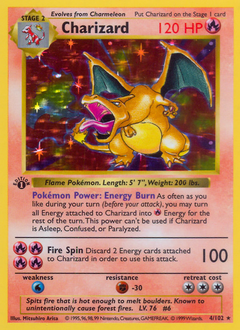
A look inside the AI vision technology that powers instant Pokémon card grade estimates — and what it can and can't do.
When you upload a card to PokéGem Grader, Claude (Anthropic's AI) visually inspects the image the same way a human grader would — examining centering, corners, edges, and surface condition. Here's exactly what happens.
Step 1: Card Identification
The AI first identifies the card: name, set, year, number, rarity, and language. This is used to fetch current market pricing from TCGPlayer and compute submission ROI.
Step 2: Defect Analysis
Claude scans four categories:
- Centering — Border ratio on front and back (e.g., 55/45). PSA allows up to 60/40 on front for a 10; BGS requires 55/45.
- Corners — Whitening, fraying, creasing, or bending at all four corners.
- Edges — Chipping, nicking, denting, or silvering on all four edges.
- Surface — Scratches, print lines, stains, holo scratches, and creases.
Step 3: Rules Engine
The defect data flows into a rules engine that computes grade estimates for each company. PSA uses a whole-number scale; BGS and CGC use 0.5-point increments with public subgrades; SGC uses 0.5-point increments and is known for strict surface grading.
Accuracy & Limitations
AI grading is most accurate for clearly lit, high-resolution images. It struggles with:
- Subtle holo scratches that only appear at certain angles
- Very fine corner fraying invisible at standard photo resolution
- Print defects on the card back that are hard to photograph
Think of our grades as a pre-screening tool — they help you decide which cards are worth submitting before paying grading fees.
Authentication
The AI also checks for signs of counterfeit or reprint cards — incorrect fonts, border colors, back patterns, or holographic inconsistencies. This is AI-only and should always be confirmed by a professional grader for high-value cards.